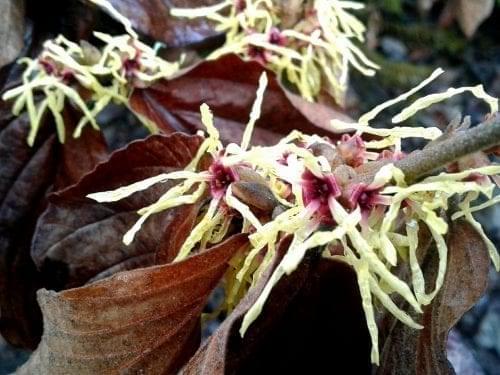
Witch Hazel (Hamamelis virginiana) sits on pharmacy shelves along with with other OTC (over the counter) topical liquids. It is so common in drug stores that most people forget that is herbal medicine. It’s uninterrupted use in medical and home use is more proof of the power and utility of witch hazel as an astringent.
In it’s original form, witch hazel is a shrub or small tree. It is native to North America and can be found in backyards and arboretums nationwide. It has been used medicinally by First Nation people such as the Iroquois, the Potawatomi and the Osage. The abundance of tannins in witch hazel combined with flavonoids and made it favorite for treating skin conditions such as hemorrhoids and bruising. The bark is rich in a diversity of tannins (3-10%) including hamamelitannin, catechins, gallotannins and procyanidins.
How It Works
Lipoxygenase enzymes are a naturally occurring compounds in the body. They are primarily tasked with
Tannins such as hamamelitannin are reliable inhibitors of 5-lipoxygenase.
Form and Dosage
Witch hazel is most commonly sold as a liquid extract or a distilled extract for topical use. It can be found in jars with gauze pads for use on varicosities such as hemorrhoids or varicose veins. It is also available as a decoction, cream, salve, suppository or tablets. It most often used as topically a few times daily or as a PRN.
Contraindications
There is no evidence that topical use of witch hazel is contraindicated with other medicine or prescriptions. Internal of the tea use can cause stomach upset.
Further Research
Science Direct: Triterpenoid Saponin
NCBI: Ocimum sanctum Linn. A reservoir plant for therapeutic applications: An overview
American Family Physician: The Effect of Cytochrome P450 Metabolism on Drug Response, Interactions, and Adverse Effects
NCBI: The Clinical Efficacy and Safety of Tulsi in Humans: A Systematic Review of the Literature