
Natural Tips for a Wire Worm-Free Garden

Wire worms love fleshy roots like potatoes, radishes, parsnips, and carrots. They don’t usually kill a plant but will leave a gardener’s labor of love riddled with holes and nicks that are only discovered after those tasty root crops are pulled from the ground. Some damage by these villains can be mistaken for slug or snail damage but remember, slugs and snails are surface feeders. Holes in produce occurring underground are from voracious wire worms, the larvae of the click beetle. Organic gardeners have an advantage over the conventional gardener since the click beetles are notorious for their rapid recovery rate from chemical pesticides. These thin, yellowish grubs leave behind veggies that can be salvaged by cutting out the damage in the kitchen. The best prevention of wire worm damage starts in the seed bed.
Easy Tips for Ripening Green Tomatoes

Gardeners become desperate to salvage their crops as autumn lowers the thermostat. While the daytime temperatures are warm enough to ripen tomatoes, nighttime temperatures threaten developing fruit. These crops aren’t doomed to rot as many backyard horticulturists fear. A few simple steps can be taken to ripen green tomatoes.
Creating the Snail-Free Garden: All-Natural Tips for the Organic Gardener

Gardens are full of life. Some of that life, like the snail population, isn’t good for the garden.The biggest snail invader in Oregon gardens is the Brown Garden Snail, which was originally imported to San Francisco in the 1850s for escargot. This tiny menace can denude a tray of unsuspecting tomato starts in one night. The organic gardener has several effective tools available for defense that are not only safe for pets and children but are also good for the garden.
Herbal Tips for Eliminating Cat Urine from a Floor

The smell of cat urine is overwhelming. The causes for a cat’s inappropriate urination can be complex. Too many indoor cats with not enough places to pee is the most frequent cause. Cats can choose to pee indoors if they feel threatened by a new baby, a new pet, or a family member they feel […]
Harvest Your Own Rose Hips: Tips and Tricks for Perfect Hips
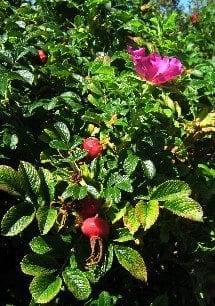
As cold weather creeps back into Oregon, the settling temperatures help develop the fruit of roses in our own backyards. This fruit is a sweet treat called rose hips. Rose hips have had a place on the dinner table for generations.
Pocket Herbal Word Find

This easy word find is based on the herbs in our Pocket Herbal. If you don’t recognize a word, look it up in The Practical Herbalist® Pocket Herbal. Download the puzzle and the anwers by clicking on the following links. The files are PDFs so you will need Acrobat Reader. Pocket Herbal Puzzle Pocket Herbal […]
Horse Chestnut – Pocket Herbal
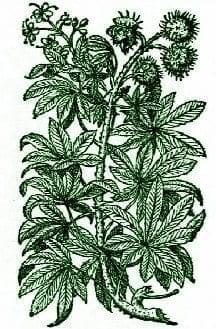
Aesculus hippocastanum – Hippocastanaceae family Readers of Anne Frank’s book, Diary of a Young Girl, may already associate horse chestnut trees with rejuvenation. A tall horse chestnut grew outside the Amsterdam warehouse were she and her family hid from the Nazi persecution. Anne Frank wrote frequently of taking breaks from their stuffy attic refuge to […]
Wild Cherry – Pocket Herbal
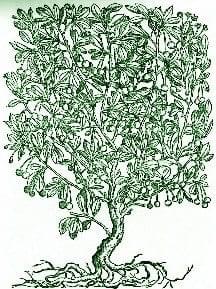
Prunus serotina/virginiana – Rosaceae family Wild cherry trees dress up the global landscape. These North American beauties have been prized for centuries for their ornamental value due to their leaf shape, fragrant blossoms and colorful fruit. Wild cherry’s classic beauty is more than skin deep. Cherry pits were part of renaissance Europe’s medicine chest. Families […]
Juniper – Pocket Herbal

Juniperus communis – Cupressaceae family Juniper plays the role of the trickster in the herbal world. Its history is colored with paradoxes. The ancient Greeks started its use innocently enough by brewing the berries into a medicinal liquor. Variations of this recipe remained popular for hundreds of years as a tonic to the urinary tract. […]
Iris – Pocket Herbal
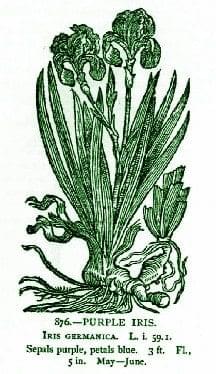
Iris versicolor – Iraceae family In 1147, King Louis the VII had a dream. In it, according to legend, he was commanded to adopt the blue iris as the national flower. It stirred him so deeply that he had the iris carved into his coat of arms. For the next six hundred years, the iris, […]
Lavender – Pocket Herbal

Lavendula officinalis/angustifolia – Lamiaceae family According to legend, four thieves were caught in 17th century France. The penalty for theft was normally severe but these thieves were special. Somehow they had been stealing from plague victims for months without getting sick. The judge struck an unusual deal: their secret in exchange for freedom. The criminals […]
Sage – Pocket Herbal
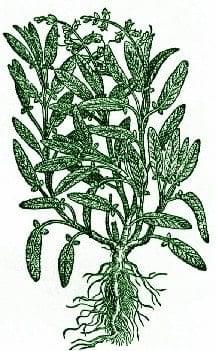
Salvia officinalis – Lamiaceae family In the 800s AD, Charlemagne issued a decree that every farm on crown lands must grow sage “…for the benefit of the nation.” No doubt this French emperor was thinking of the popular medieval saying, “Why should a man die when sage grows in his garden?” Sage has been regarded […]