
Chickens in the Organic Garden

Preparing new beds for spring planting is a lot of work on your own. Chickens are great helpers in the garden if you let them. Their little feet are built in rakes for clotted soil. The beds I didn’t let the chickens work last year were plagued by cutworms and cabbage moths, but the chicken-tended ones were pest-free. Chickens close the loop in our artificial gardening cycle. They make organic gardening much easier since they eliminate the bugs that are vectors for plant diseases.
Sweet Gum Seed Pods as Slug and Snail Repellant

November and December are the time to gather organic slug and snail deterrent for next summer’s garden. Autumn winds will have rattled the sweetgum trees and loosened their spiky seed pods to the ground. Homeowners are obliged to rake them up from walkways and lawns as they can trip up pedestrians. Why not save them to protect tender seedlings? Sweetgum trees are native to the southeastern states but are planted in Oregon as an ornamental landscape tree. The lovely five-pointed leaves turn red, orange, and burgundy in autumn. The seed pods, given unpleasant names such as “ankle turners” and “porcupine eggs,” are problems for landowners. They cause lumps in the lawn as they don’t decay quickly. These troublesome sticklers are treasures for organic gardens.
Potato Towers: How To Make Vertical Garden Beds for Tubers
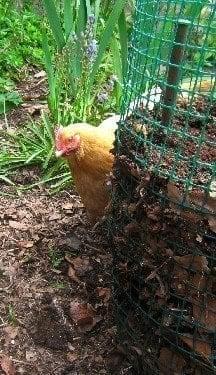
Gardening in the city requires some ingenuity. Space is at a minimum. Potato Towers are easy to build garden beds that can house baking potatoes, new potatoes, sweet potatoes, or yams. The taller your potato tower is, the more tubers you can grow.
Garden Cloches: How To Make a Recycled Mini-Greenhouse
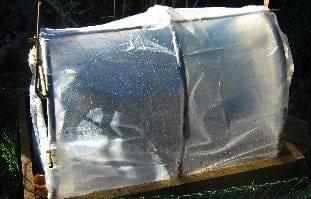
Spring weather in the Willamette Valley is unpredictable. It can be warm enough to fool you into planting tomato starts in the morning and cold enough for snow by the afternoon. A well placed garden cloche can be the difference between life and death for tender transplants. Even people with the good fortune to have their own greenhouse can benefit from cloches.
Pocket Herbal Word Find

This easy word find is based on the herbs in our Pocket Herbal. If you don’t recognize a word, look it up in The Practical Herbalist® Pocket Herbal. Download the puzzle and the anwers by clicking on the following links. The files are PDFs so you will need Acrobat Reader. Pocket Herbal Puzzle Pocket Herbal […]
Horsetail – Pocket Herbal

Equisetum arvense – Equisetaceae family To call Horsetail a dinosaur plant is not entirely accurate. The horsetail family emerged from boggy, primordial swamps over a hundred million years before dinosaurs walked the Earth. At the time, giant dragonflies with 2 foot wingspan rested in horsetail forests grown over 300 feet tall. Today, herbalists still find […]
Flax – Pocket Herbal

Linum usitatissimum – Linaceae family Flax is the grandmother of human civilization. Primitive foragers gathered its seed for food. Early Mesopotamians pressed the seed and fed the high protein remains of the seed mash to fatten their cattle. Ancient Egyptians wove its soft, flexible stalks into linen. As flax spread, clever fingers learned to disentangle […]
Licorice – Pocket Herbal
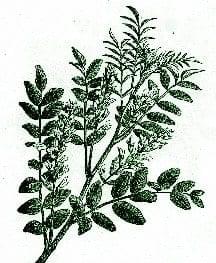
Glycyrrhiza glabra – Leguminoseae Family True licorice is an uncommon treat. It is rare to find licorice candy that is still flavored with licorice root. Most manufacturers use anise or artificial flavorings instead. For Alexander the Great however, there was no substitute for simply chewing on a piece of dried licorice root. The Egyptians taught […]
Myrrh – Pocket Herbal

Commiphora mukul/molmol – Burseraceae family During the California gold rush of the 1850’s, myrrh was more valuable by weight than gold. As San Francisco was being built, quality dental treatment was scarce. An infected tooth could prove excruciatingly fatal overnight. As one miner wrote, “No place can hardly be worse for a sick man than […]
Almond – Pocket Herbal

Prunus dulcis – Rosaceae Family Massage therapists revere almond oil as the queen of oils. This oil is easily absorbed into the skin which allows the therapist’s to glide over troubled muscles without leaving a greasy residue. This regal yet inexpensive emollient softens skin with use which makes it the best choice for dry or […]
Meadowsweet – Pocket Herbal

Filipendula ulmaria – Rosaceae Family To meadowsweet, aspirin is an annoying upstart. The trouble started in 1835 when a German chemist discovered that this graceful European herb contained salicylic, which eased pain. At the time, this information was treated simply as scientific trivia. It was much easier to make a cup of tea from a […]
Pomegranate – Pocket Herbal

Punica granatum – Punicaceae Family Pomegranate has a powerful reputation. History tells of this fruit as food, medicine and potent symbol in myth and legend. Key personalities throughout human culture have used pomegranate to teach valuable lessons to those thirsty for knowledge. Ganesh, King Solomon, Persephone and Buddha are just a sampling of those who […]